
Why You Still Don’t Feel Like Yourself in Perimenopause (Even If You’re “Doing Everything Right”)
If you are in your 40s or early 50s and thinking:
“I don’t recognise myself.”
You are not alone.
Many of the women I see in clinic are intelligent, health-conscious, proactive. They are exercising. Eating well. Some are taking HRT. Many are doing “all the right things.”
And yet they still feel:
Wired but exhausted
Anxious without explanation
Flat, foggy or irritable
Awake at 3am
Unsettled in their own body
So what is missing?
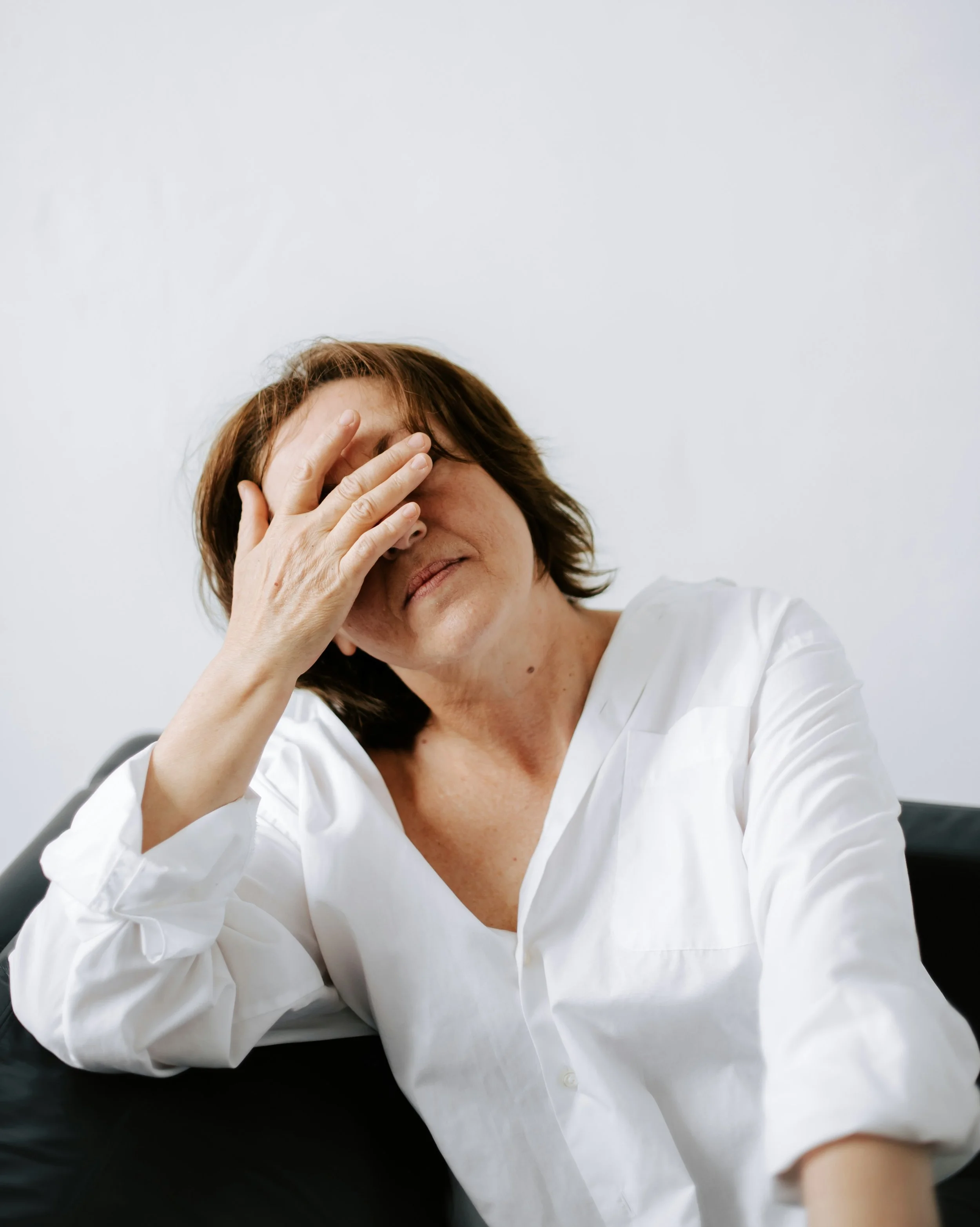
Menopause Is Not Just an Oestrogen Story
We have been conditioned to think menopause is simply about declining oestrogen.
Oestrogen absolutely matters — but it is only one part of a much more complex physiological transition.
Perimenopause affects:
The nervous system
The adrenal glands
Thyroid function
Blood sugar regulation
Sleep architecture
Inflammatory pathways
When we treat menopause as a single-hormone issue, we miss the wider picture.
And that is often why symptoms persist.
The Nervous System Shift
Oestrogen has a calming, stabilising effect on the brain. As levels fluctuate, the nervous system becomes more reactive.
This can present as:
Anxiety
Palpitations
Heightened stress sensitivity
Reduced resilience
Overwhelm
It is not a personality change. It is neuroendocrine physiology.
Without addressing nervous system regulation — through lifestyle, nutrition, or appropriate herbal support — many women continue to feel “on edge,” even if they are on HRT.
Cortisol and the 3am Wake-Up
One of the most common complaints I hear is waking between 2–4am.
Often, this is linked to cortisol rhythm disruption.
As progesterone declines, its calming effect reduces. Blood sugar may fluctuate overnight. The liver may be working harder to metabolise hormones. Stress accumulates.
The result? A cortisol spike at 3am.
This is not random insomnia. It is physiology.

Thyroid Overlap
Perimenopause and thyroid dysfunction share many symptoms:
Fatigue
Brain fog
Weight changes
Low mood
Hair thinning
Yet thyroid function is not always optimally assessed.
Even when blood tests fall within “normal” ranges, subtle dysfunction can exacerbate menopausal symptoms.
An integrative menopause approach considers this overlap.
Why Personalised Care Matters
No two women experience menopause in the same way.
Some need hormone optimisation.
Some need nervous system regulation.
Some need metabolic support.
Most need a combination.
This is where evidence-informed herbal medicine can be powerful — not as an alternative to conventional care, but as an integrative partner.
Because menopause is not about suppressing symptoms.
It is about supporting a whole-body transition.
If you would like a deeper understanding of what is happening in your body during this phase consider my 6 Week Menopause Course.